Stability in a Changing World: Our Approach to Shopify App Architecture

Developing for Shopify is like running on a moving treadmill. What was standard yesterday (like specific Polaris patterns or REST API endpoints) might be deprecated today and gone tomorrow.
When we started building our products, we faced a crucial question: What should we build on to ensure our code remains relevant for years, not just months?
Instead of just listing the libraries we use right now (because that list would be outdated by the time you finish reading), we want to share the principles behind our technology choices.
1. The Backend: Stability Over Hype (Nest.js)
Shopify constantly changes the rules on the frontend (shifting to Remix, updating App Bridge). However, business logic must remain solid as a rock.
We chose Nest.js as the foundation of our backend. Why?
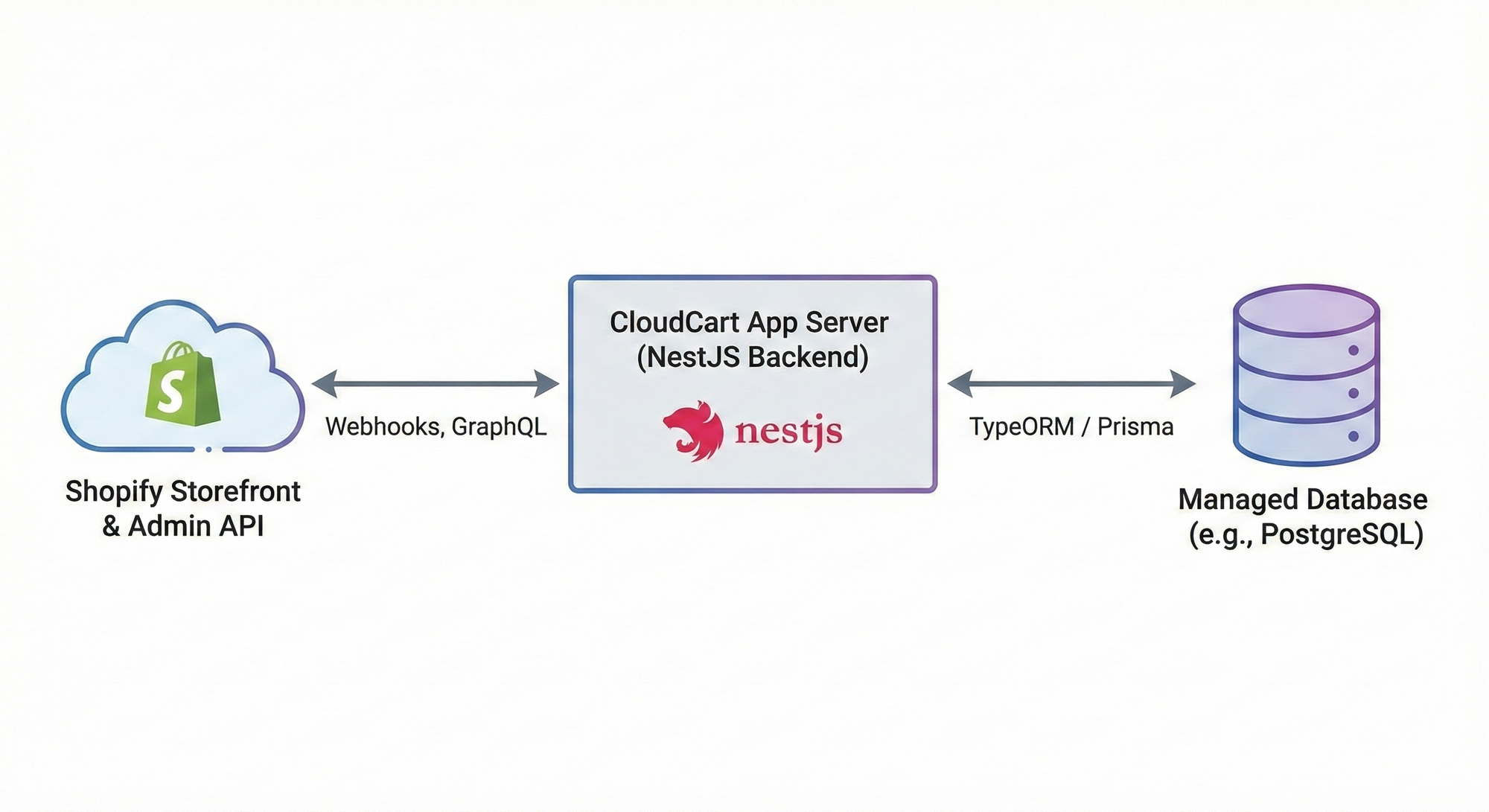
- Structure: Nest forces us to write clean, modular code. This is critical when an app grows beyond the "MVP" stage and handles complex billing and webhooks.
- Type Safety: TypeScript allows us to catch errors during development, not in production.
- Scalability: When our clients' stores experience high traffic (like during Black Friday), the Nest.js architecture helps us handle the load efficiently.
2. The Frontend: Native Feel & Adaptation (React & Polaris)
The Shopify Admin interface is the gold standard for B2B products. A user shouldn't feel a difference between configuring our app and adjusting standard Shopify settings.
We use React in conjunction with the Polaris design system, but with an important nuance. We keep a close eye on trends (like the evolution of Polaris for React and Shopify App Bridge).
Our approach is not to tie ourselves rigidly to a specific library version, but to build components that are adaptable. The goal is always a UX that feels "native" to the platform.
3. Performance & Safety
We reject "bloatware" that slows down the admin panel or the storefront.
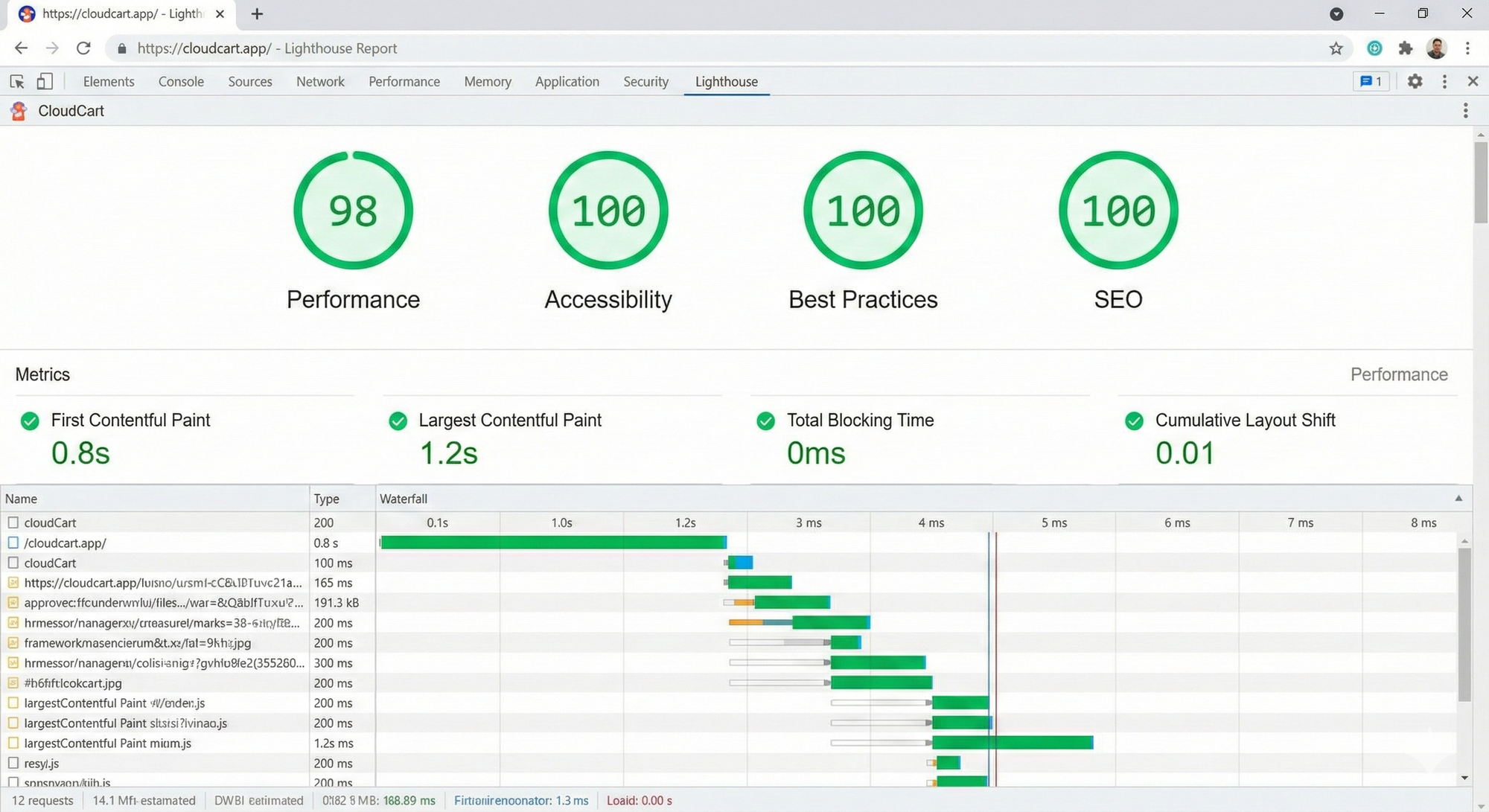
- Storefront: We write lightweight, asynchronous JavaScript to ensure we don't impact your Core Web Vitals.
- API Limits: We strictly adhere to Shopify's API rate limits, utilizing smart queues for background tasks to ensure reliability.
Conclusion
Technologies change, but principles remain. Our stack may evolve (today it's Node/Nest/React, tomorrow—perhaps Remix/Hydrogen), but the goal remains the same: to create reliable tools that help you sell more.
In the next articles, we will dive deeper into the specific features of our flagship product, CloudCart.